


The number every family caregiver should remember before squeezing another bathroom spray is this:
20 cigarettes a day.
A major 20-year study found that regular cleaning was linked to lung-function loss comparable to smoking roughly 20 cigarettes every day.
Another study put air monitors beside home-care aides while they cleaned a bathroom. With the bleach product, 13 out of 20 hit chlorine peaks above OSHA’s ceiling limit.
Then a study of 73,262 nurses linked weekly disinfectant use to a 35% higher rate of COPD.
Read those numbers again.
A clean-looking bathroom can last a day.
The damage done to your lungs may not be so easy to wipe away.
I Have Heard the Same Sentence in Lung Clinics for Years
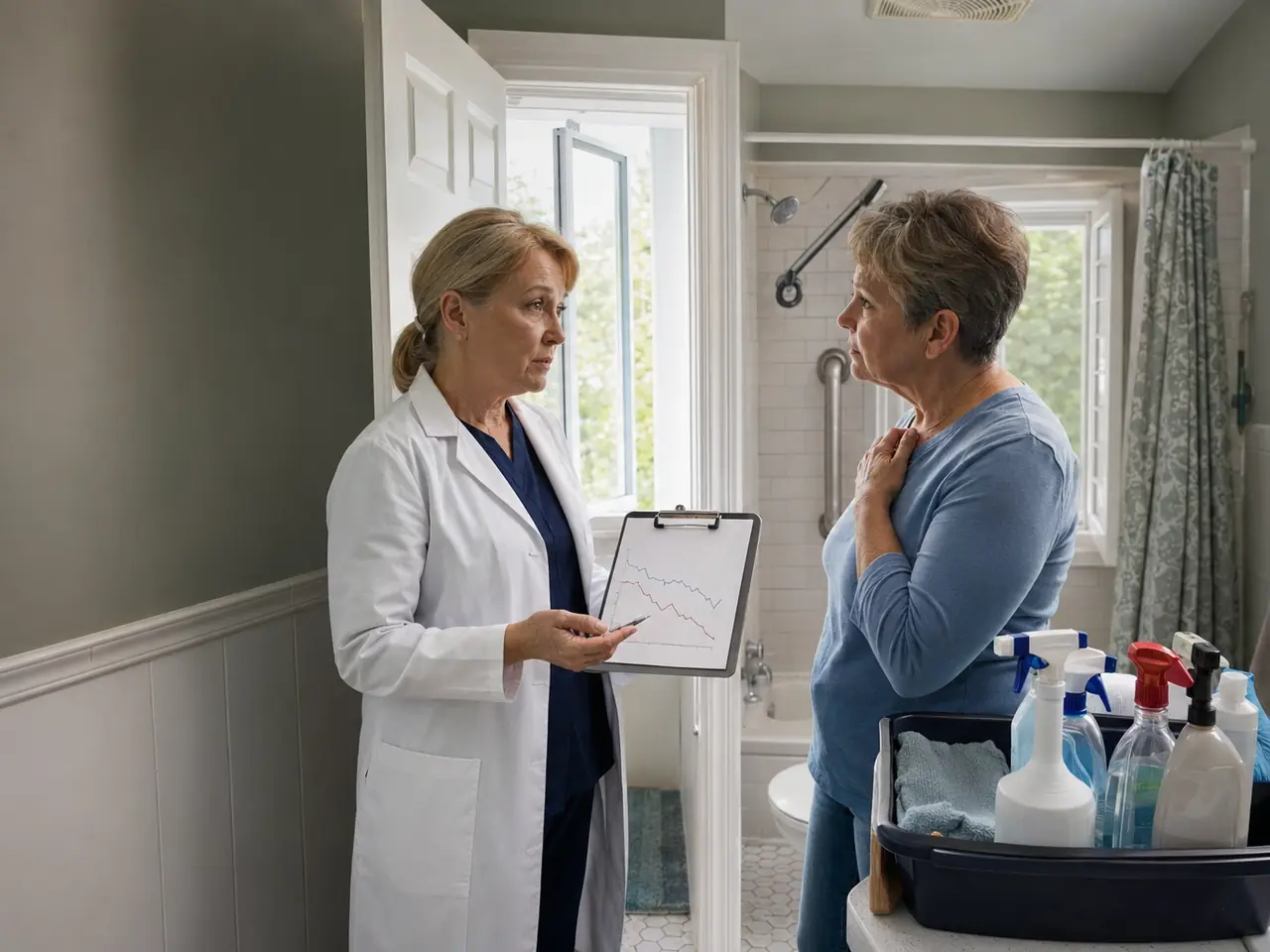
My name is Dr. Mara Vance. I am the pulmonary specialist narrating this consumer report.
For years, I have watched people struggle through breathing tests, chest scans, bronchoscopies and oxygen evaluations.
Many expected me to ask only one question:
“How long did you smoke?”
But some looked at me in shock.
“Doctor, I never smoked.”
So I learned to ask about the air they breathed at work and at home.
That is when another pattern kept appearing.
They were caring for somebody.
A mother with dementia. A father with Parkinson’s.
A husband recovering from a stroke. A wife who could no longer reach the toilet alone.
They were the person called at 2:00 a.m. after an accident.
They were the person bending over the shower bench, spraying the toilet base, attacking the grout and shutting the door so the chemical smell would not reach the bedroom.
They did not think of themselves as cleaners.
They thought of themselves as sons, daughters and spouses doing what had to be done.
The lungs do not care whether the exposure came from a paycheck or from love.
At 2:13 A.M., Maria Turned Her Mother’s Bathroom Into an Exposure Chamber
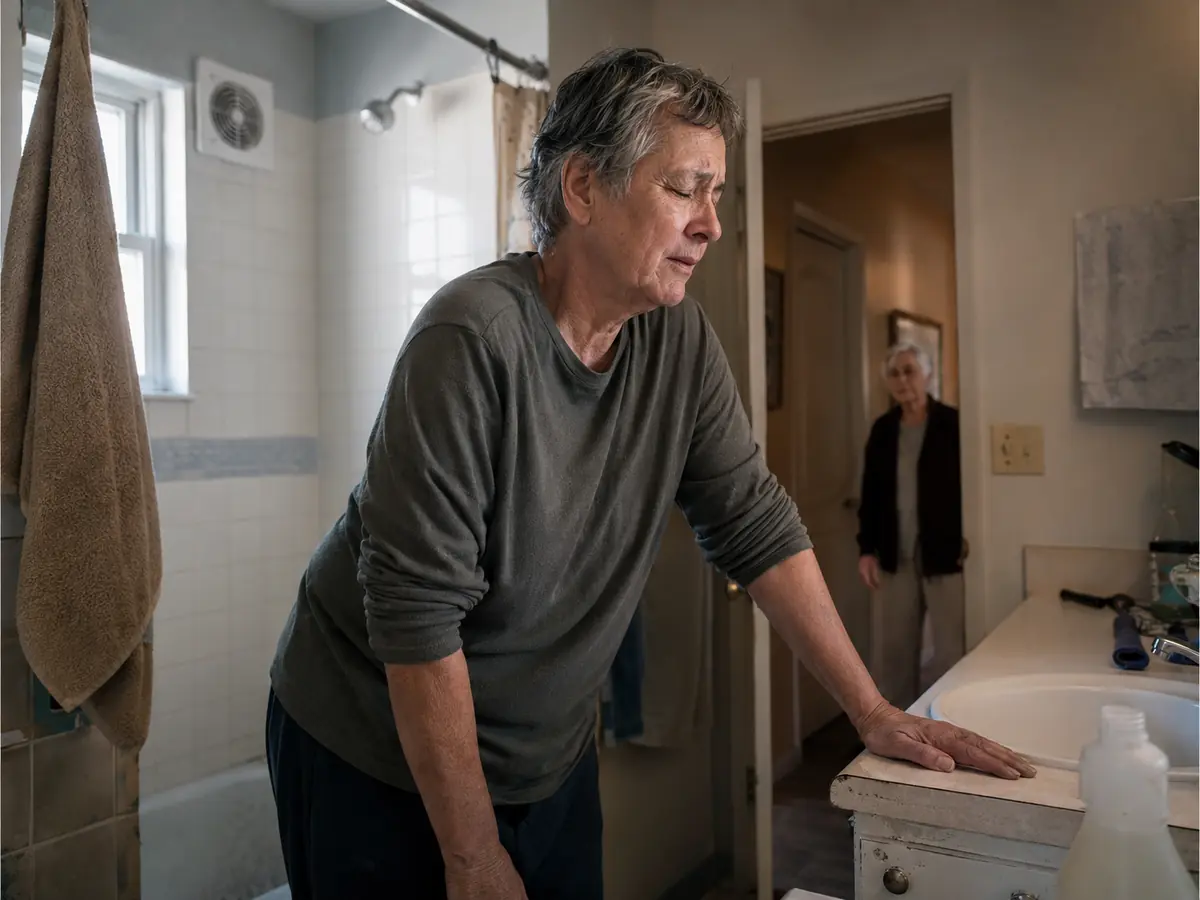
One caregiver case captures the danger.
Maria was 61 and cared for her mother, who had vascular dementia and needed help around the clock.
At 2:13 one morning, her mother missed the toilet.
Maria helped her wash, changed her clothing and guided her back to bed.
Then Maria returned to the bathroom alone.
She sprayed a bleach cleaner around the toilet. She used an acid gel on the mineral ring inside the shower.
Then she closed the door because her mother became upset by strong smells.
The fan above her rattled. It barely moved the steam.
Maria bent over the toilet base and scrubbed with a small hand brush.
Her eyes watered. Her throat burned.
She coughed into her sleeve, added more spray and kept working.
Why?
Because the grout was still dark. The ring was still there.
And the chemical smell made the room feel “sanitary.”
Twenty-three minutes later, Maria walked into the hallway with a headache and a tight chest.
Her mother called from the bedroom.
“Are you okay?”
Maria answered with the sentence I have heard too many caregivers say:
“It’s just the cleaner.”
No.
Burning eyes are not proof that a product is working.
A raw throat is not the smell of safety.
Coughing after every bathroom reset is not a normal price of caring for somebody.
The Bathroom Creates the Perfect Exposure Trap
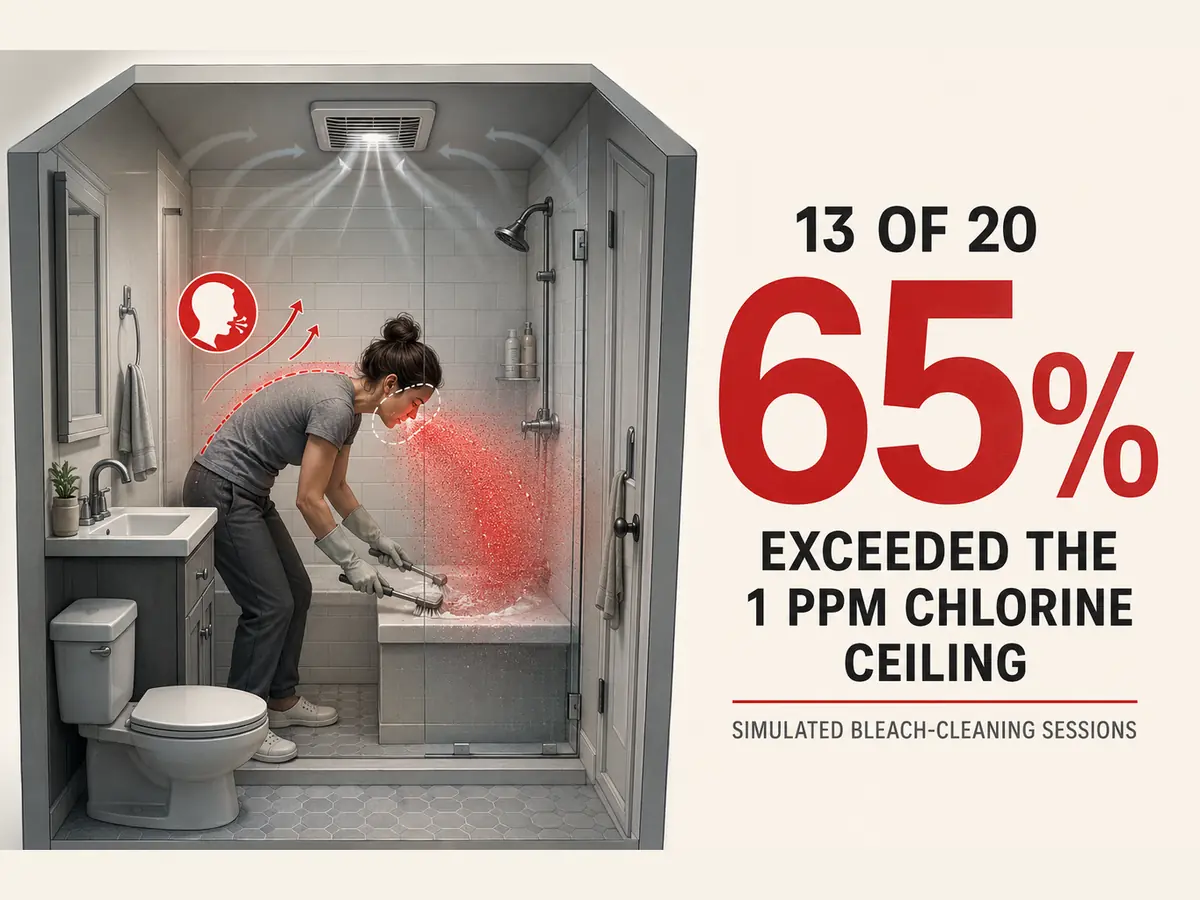
The home-care aide study explains why Maria’s routine was so concerning.
Researchers completed 169 air-sampling sessions with 22 aides. The monitors sat in the aides’ breathing zone while they cleaned a simulated residential bathroom.
The results were brutal:
- Spraying produced the highest exposure.
- A quaternary-ammonium product produced more than twice the average volatile-organic-compound level measured with the bleach product.
- 65% of aides using the bleach product hit chlorine peaks above OSHA’s 1 ppm ceiling.
The monitors captured ordinary bathroom cleaning inside a small room—the exact exposure pattern repeated in caregiver homes every day.
Now picture what happens during caregiving:
The door is closed for privacy. The fan is weak.
The spray is inches from the face. The caregiver is bending, reaching and breathing harder while scrubbing.
Each pull of the trigger puts more material into the same tiny pocket of air.
You are not standing outside the cloud. Your nose and mouth are directly above it.
The Damage Can Build Long Before You Feel “Sick”
COPD does not usually arrive as one dramatic collapse.
It steals life in small pieces.
A cough after cleaning. Wheezing blamed on allergies.
Stopping halfway up the stairs. Needing a break after carrying laundry.
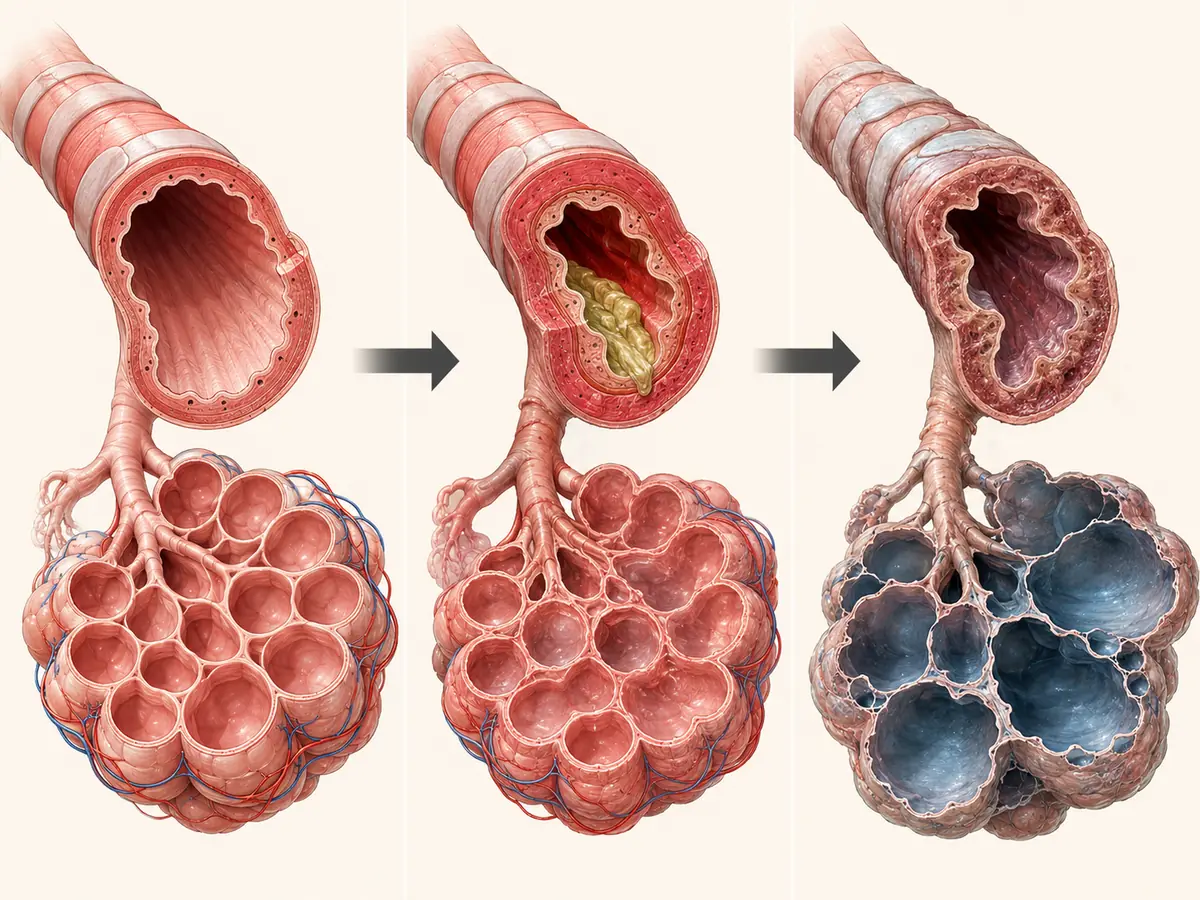
In COPD, narrowed airways and damaged air sacs make it harder to push old air out. The lungs can begin trapping air.
Every new breath starts with less room.
That is why people describe it as trying to breathe through a straw while somebody slowly pinches the straw closed.
Now add the cruelest part for a caregiver.
The person downstairs still needs help standing. The shower chair still needs cleaning.
The next accident will not wait for the lungs to recover.
If the caregiver loses the ability to breathe, the household does not have one person who needs care.
It has two.
The Real Cleaning Problem Was Not a Lack of Chemicals
Maria believed stronger buildup required stronger cleaner.
That sounds logical until you look at what the bottle is trying to replace.
Soap scum, mineral film and dirt stick to tile through physical contact. Cleaner can loosen that bond.
But something still has to move across the surface and break the buildup free.
With a sponge, Maria’s wrist created every stroke.
With a six-inch brush, her spine brought her face down to the fumes.
When the grime refused to move, she added more chemical because she had no more physical force left to give.
That is the trap:
Weak mechanical cleaning creates pressure to use stronger chemistry.
Opening a window helps. Running a real exhaust fan helps.
Never mixing products is essential.
But those steps do not remove the mineral ring.
The better answer is to make a machine produce the scrubbing motion while the caregiver stands farther from the wet surface.
The Tool That Moves the Work Out of Your Lungs and Into a Motor
That search led Maria to the Sumoria ScrubForce Pro Spin Scrubber.
If you have never used a spin scrubber, picture an electric toothbrush built for an entire bathroom.
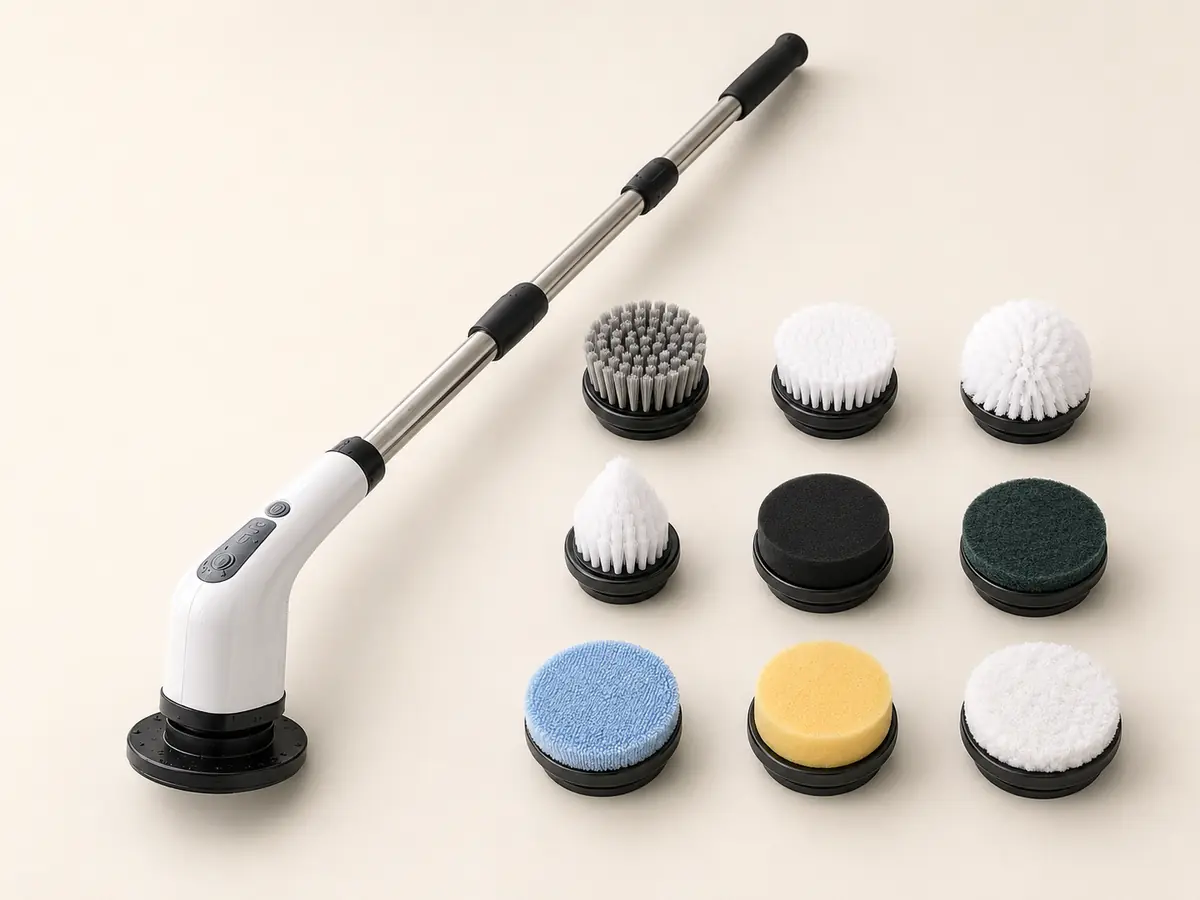
It is a cordless cleaning tool with a long adjustable handle and a powered brush at the end.
You apply a small amount of compatible cleaner to the surface, choose the correct head, press the button and guide the brush.
The motor creates the repeated scrubbing strokes. Your hands only steer.
The ScrubForce Pro is designed around three problems caregivers face:
- Powered rotation. Its high-torque motor keeps the brush moving against the surface instead of forcing the caregiver to create every stroke.
- Distance. The adjustable extension handle reaches tubs, floors, shower walls and toilet edges while the caregiver stays more upright and farther from the wet chemical surface.
- The right contact shape. Nine attachments cover broad tile, curved tubs, grout, corners, soft surfaces and narrow detail areas.
A flat mop glides over recessed grout. A wide brush cannot sit inside a narrow corner.
A sponge loses contact around a curved toilet base.
When the head does not match the surface, the grime survives and the caregiver reaches for more spray.
With ScrubForce Pro, Maria used the broad head on the shower wall, the curved head around the tub and a smaller head along the grout and toilet edge.
She still cleaned carefully. She still disinfected when illness or bodily fluids required it.
But ordinary mineral film and soap scum no longer required turning the room into a chemical cloud.
The Five Rules I Want Every Family Caregiver to Follow
- Open the room. Use a working exhaust fan and a window when possible.
- Never mix products. Bleach combined with acids or ammonia can create dangerous gases.
- Stop spraying the air. When the label allows it, apply the smallest useful amount directly to the compatible surface or cleaning head.
- Use mechanical force for ordinary grime. Let powered agitation replace unnecessary spray and hand scrubbing.
- Disinfect only when the situation calls for it. Cleaning and disinfection are different jobs. Follow the disinfectant label and full contact time.
Why Waiting Makes No Sense
Caregiving does not pause while you compare another twelve cheap brushes.
The next shower bench will collect film. The next accident may happen tonight.
The next closed-door cleanup is already coming.
The current offer is $89 for one ScrubForce Pro, or $148 for two—$74 each.
Spread across one year, one tool at $89 comes to about 24 cents a day.
That is less than most people spend on one bottle of water.
And the comparison is not 24 cents versus nothing.
It is 24 cents versus another day with your face over the spray, another night coughing into your sleeve and another year treating burning lungs like proof of a clean bathroom.
Sumoria backs the current offer with a 30-day risk-free period, giving caregivers a direct reason to stop postponing the equipment change their lungs need.
I hope you never need a lung specialist.
I hope you never sit across from somebody while they explain that damaged lung function may not return.
I hope your family remembers the years you cared for them—not the years cleaning slowly took the breath out of you.
Your loved one needs a clean bathroom. They also need their caregiver breathing.
The equipment switch caregivers are making
See Why Caregivers Are Switching to ScrubForce Pro
✓ Opens the official Sumoria page for family caregivers.
How I Secured the Official Link for Caregivers
While examining powered-cleaning equipment, I spoke with a housekeeping operations contact who had worked at a major Las Vegas resort. She described the industrial version of this cleaning approach—the equipment her crews used to reset heavily used resort bathrooms in as little as eight minutes.
Eight minutes for a bathroom that could otherwise become a long, exhausting cleanup.
Her teams proved what the right equipment changes: long reach, powered rotation and a cleaning head matched to the surface move repeated scrubbing out of the caregiver’s hands and into the tool.
When I asked what family caregivers could buy, she gave me the official Sumoria link for the consumer ScrubForce Pro. I secured that direct access below so readers can go straight to the same cleaning system without wasting another dollar on weak look-alikes.
The current offer is $89 for one ScrubForce Pro, or $148 for two—$74 each. One can stay in the caregiver’s home; the second can stay where the person receiving care lives.

Protect the person doing the caring
Put Distance, Power and Control Between Your Lungs and the Mess
Your family still deserves a clean bathroom. You deserve to finish without a raw throat, burning eyes or another chemical cloud hanging in the air.
✓ Use the official Sumoria page to secure the current caregiver offer.
SEE IT HANDLE THE HARD PARTS
Watch What Long Reach and Powered Rotation Change
These are the bathroom areas that usually force caregivers to bend, kneel or scrub by hand. Watch the tool carry the repeated motion instead.
CAREGIVER EXPERIENCES
What Caregivers Say After Changing the Way They Scrub
Different objections. One practical realization: the caregiver's body should not be the cleaning tool.
“I care for my father, and I used to believe the bleach smell meant the bathroom was finally safe. I would leave with watering eyes and that chemical taste in my throat. The ScrubForce Pro gives me the friction I was trying to create with more spray. I still disinfect when the situation calls for it, but ordinary soap scum no longer requires fogging the room.”
— Daniel R.Family caregiver
“Two bargain scrubbers looked powerful until the brush touched the tub. Both slowed down, skipped the grout and ended up in a closet. This one keeps working against the surface, and the corner head reaches the exact strip I used to attack with a toothbrush. I finally stopped reaching for the old hand brush halfway through.”
— Priya S.Caregiver for her mother · Family caregiver
“I expected another complicated gadget with twenty buttons. It took me one bathroom to understand it. I extend the handle, choose the brush and let the rotating head do the repetitive work. I am not wrestling a sponge around the toilet base or bending over the tub for twenty minutes anymore.”
— Michael T.Spousal caregiver · Family caregiver
“I hesitated because I already had a drawer full of ‘time-saving’ cleaning gadgets. What changed my mind was the full setup: the long adjustable handle, nine heads and enough battery to finish both bathrooms. Six weeks later, it is the tool I actually take out every cleaning day—not another cheap experiment collecting dust.”
— Alicia B.Caregiver for two parents · Family caregiver
THE NEXT CLEANUP WILL NOT WAIT
You’ve Seen the Objections. Now Protect the Person Doing the Work.
✓ Use the official Sumoria page to secure the current caregiver offer.
Sources
- Lindberg et al., New Solutions (2021): simulated bathroom exposure study
- Dumas et al., JAMA Network Open (2019): disinfectants and incident COPD in 73,262 female nurses
- Svanes et al., American Journal of Respiratory and Critical Care Medicine (2018): 20-year lung-function study
- NIH/NHLBI: What Is COPD?
- CDC: About COPD
- World Health Organization: COPD key facts
- OSHA/NIOSH: Protecting Workers Who Use Cleaning Chemicals
- CDC: Chlorine chemical emergency fact sheet
- CDC: Cleaning and disinfecting with bleach